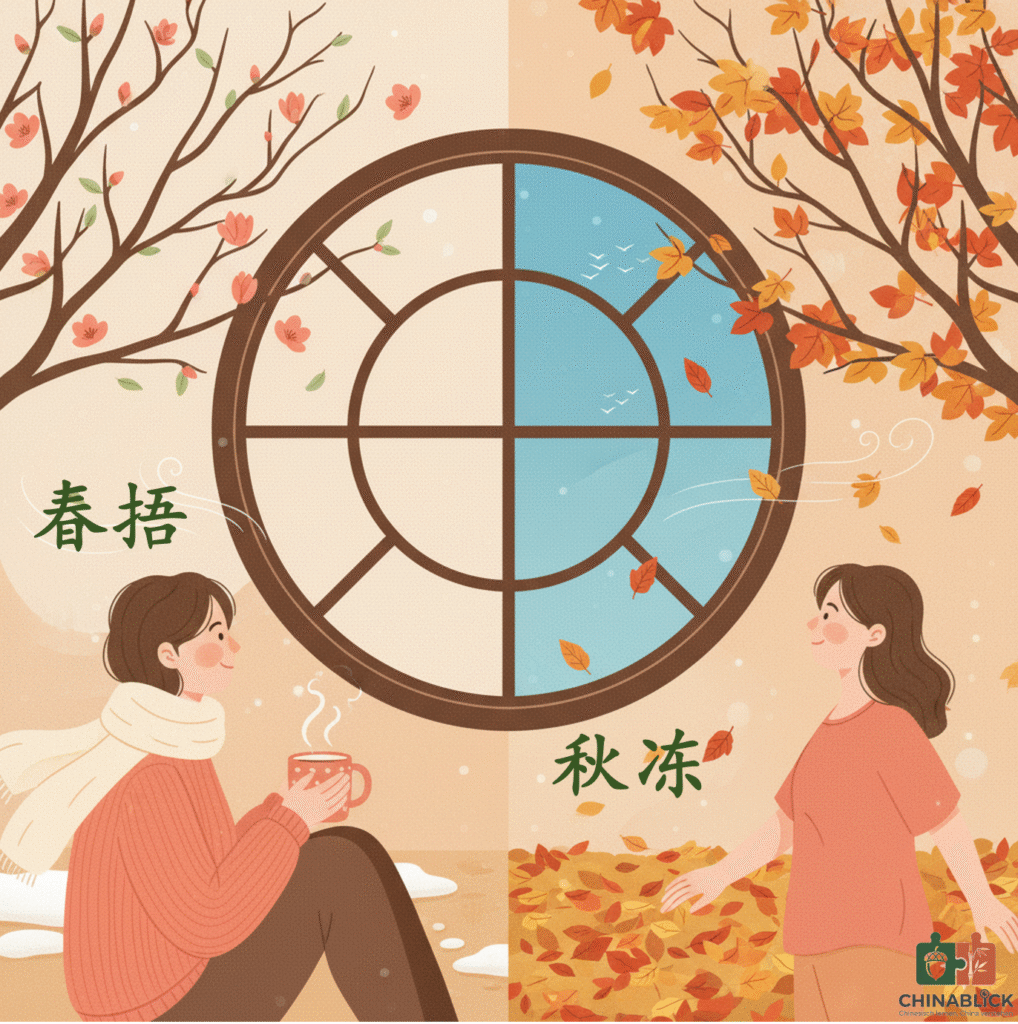
In March in Beijing, willow buds begin to appear, yet the air is still chilly. The sunlight seems to promise spring, but a sudden northern wind brings back the cold.
At this moment, an old sage speaks softly:
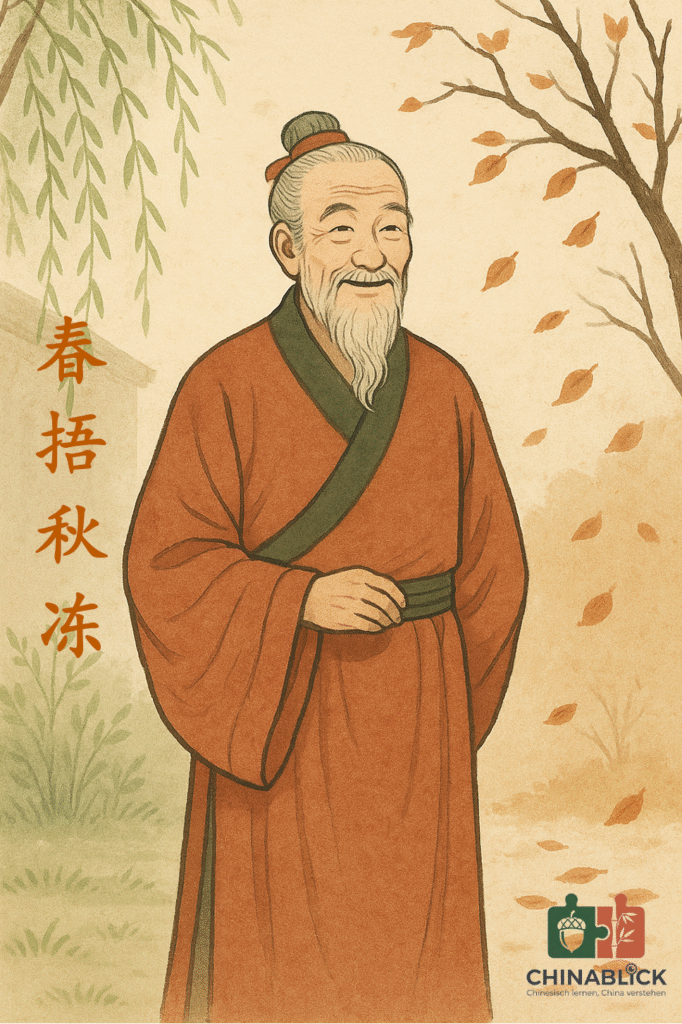
“春捂秋冻 (chūn wǔ qiū dòng) – In spring, keep yourself warm; in autumn, let the body feel some cold. “
Story and Philosophy
The sage gazes at the young buds and says:
“In spring, 阳气 (yáng qì) – the vital energy – rises like a tender sprout breaking through the soil. If one sheds warm clothes too soon, 寒气 (hán qì) – the invading cold – enters the body, just as frost can harm young plants and weaken their roots.
In autumn, however, the cooling air acts like a whetstone. If one does not rush to keep completely warm, the body gains resilience, preparing for the coming winter.”
In the classical text Huangdi Neijing 《黄帝内经》(Yellow Emperor’s Inner Canon), a medical classic compiled between the 3rd and 1st centuries BCE. it is written:
„人与天地相应,与四时相和。“
“Humans resonate with Heaven and Earth, living in harmony with the 四时 (sì shí, the four seasons).”
Similar wisdom also exists in English culture. In the UK, a traditional saying goes:
“Ne’er cast a clout till May be out”, meaning one should not shed warm clothing until May has fully arrived—echoing the idea of spring protection (春捂).
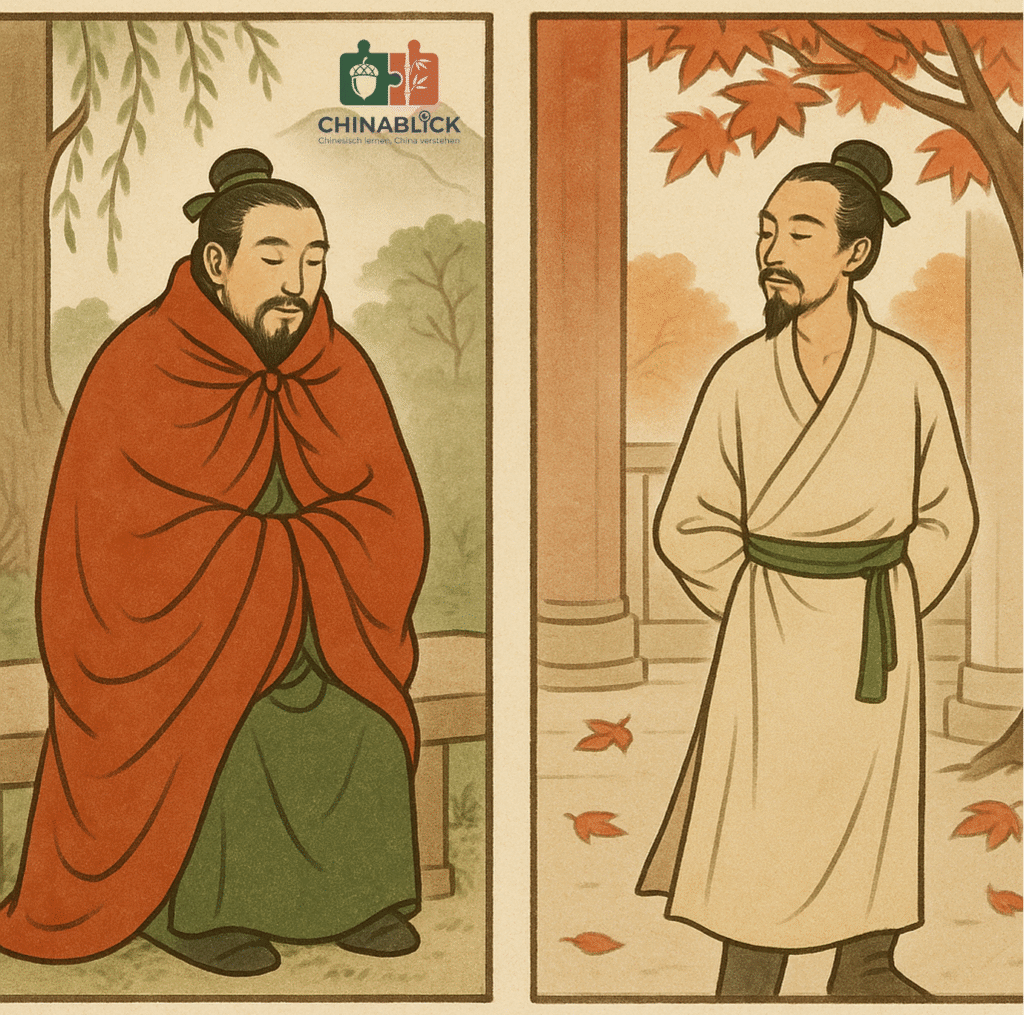
Another common adage: “There’s no such thing as bad weather, only unsuitable clothing” – reminds us that with the right attire, one can face any season. This spirit of resilience is also visible in Germany, where the tradition of Abhärtung (hardening the body) includes the famous Kneipp cure, developed by Bavarian priest Sebastian Kneipp (1821–1897). His natural healing methods—such as water-treading and other strengthening practices—have even been recognized by UNESCO as part of the Intangible Cultural Heritage. These ideas resonate strongly with the philosophy behind “秋冻 (qiū dòng)”, where allowing some cold exposure builds resilience.
In everyday speech, phrases like “bundle up and brave the elements” also capture this spirit of adapting to and harmonizing with the weather, rather than avoiding it.
Both paths, however, lead to the same insight: health is not about fighting nature, but learning to live with it.
The sage concludes softly: “养生 (yǎng shēng) – nourishing life – is not about seeking mysterious techniques. If the heart follows the seasons and clothing matches the climate, nature itself becomes the best medicine.”
Vocabulary to Learn
- 春捂秋冻 (chūn wǔ qiū dòng) – Keep warm in spring, allow some cold in autumn
- 四时 (sì shí) – the four seasons
- 阳气 (yáng qì) – vital energy, Yang energy
- 寒气 (hán qì) – cold air invading the body
- 养生 (yǎng shēng) – nourishing life, cultivating health