Golden Autumn in Beijing does not arrive with a dramatic announcement. It unfolds quietly, almost shyly, before suddenly transforming the entire city into a glowing sea of yellow and gold. For weeks, the trees remain stubbornly green. Then, almost overnight, the ginkgo leaves turn radiant, competing with the autumn sun itself.
Beijing breathes differently in these weeks. Between the heavy sultriness of summer and the sharp coolness of winter, a short and precious interval opens up. The air carries the scent of damp earth, fallen leaves, and the faint trace of cigarette smoke that is never far away in the capital. It is a sensory reminder that you are in a living, breathing metropolis.
The Magic of Golden Autumn in Beijing
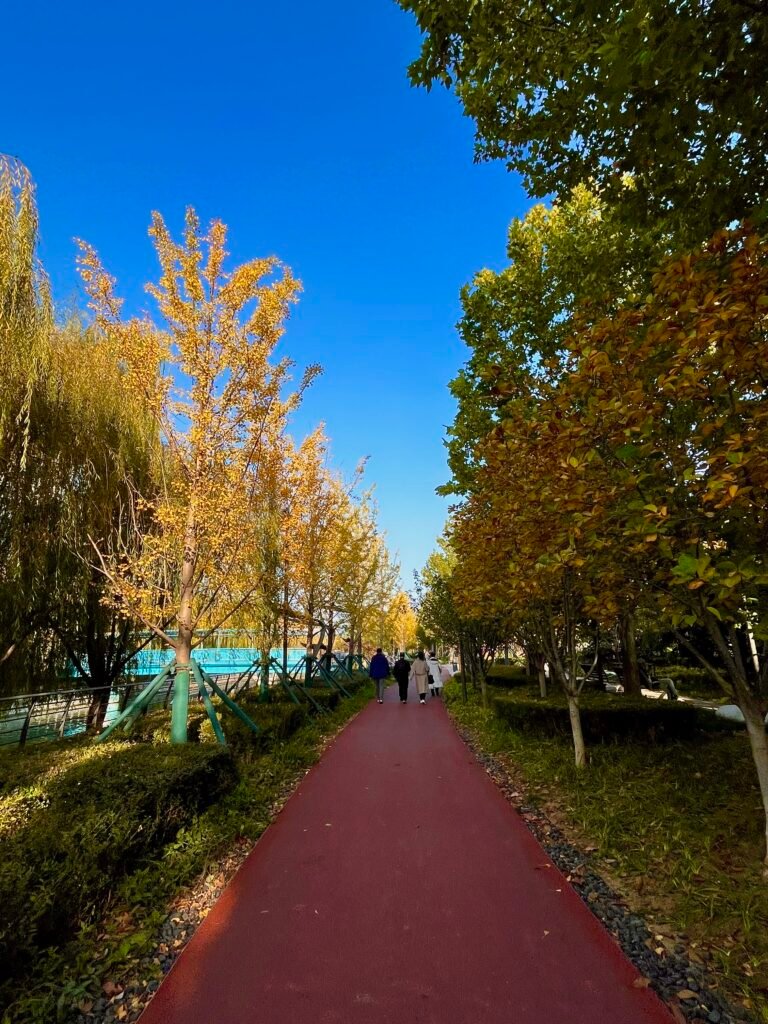
Autumn first announces itself in subtle tones. The green softens. Yellow begins to shimmer through the leaves. And then one morning, the ginkgo trees shine in a rich golden color that feels almost surreal.
The ginkgo tree is deeply rooted in Chinese history. Often planted in temple courtyards and imperial gardens, it symbolizes resilience and longevity. When these ancient trees turn gold, they do more than decorate the streets — they connect modern Beijing with centuries of tradition.
Golden Autumn in Beijing is short. That is part of its charm. It teaches you to pay attention, to look up, and to notice how quickly beauty can change.
Chaoyang Park: A Golden Retreat in the City
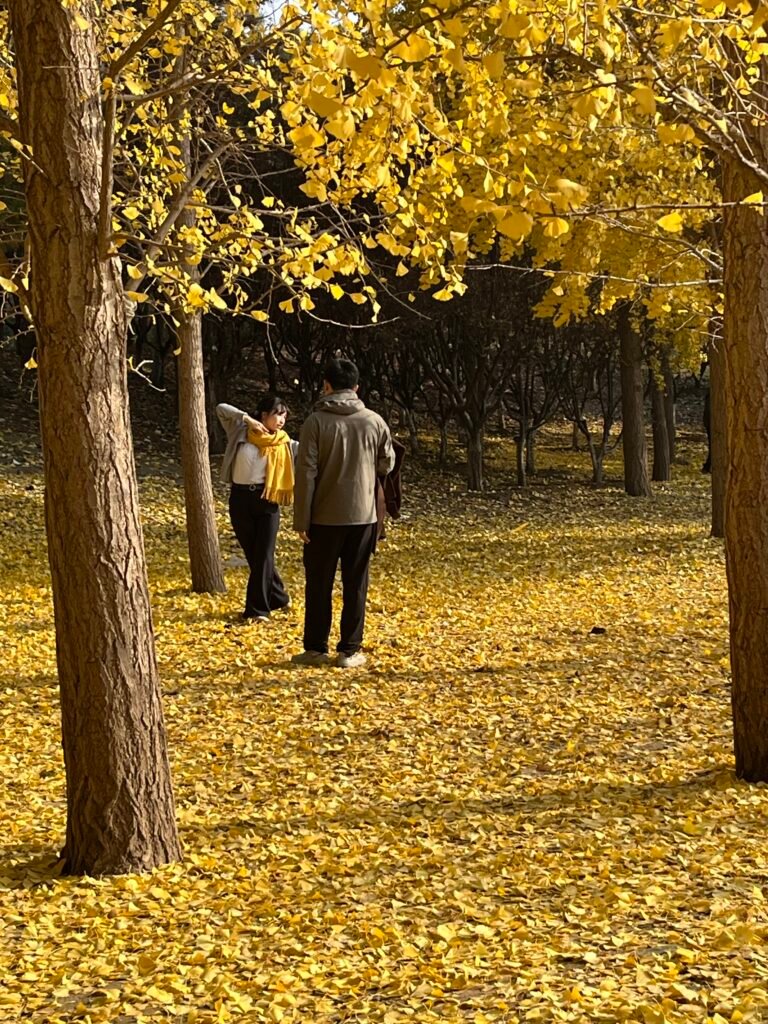
There is always something happening in Chaoyang Park in autumn. Joggers circle the paths. Elderly residents practice tai chi. Couples take photos beneath glowing trees. Yet despite the activity, a sense of calm settles over the park when the ginkgo leaves begin to fall.
The leaves drift gently to the ground, covering the pathways in gold. Children run across them, laughing. They try to gather piles, but the leaves are tirelessly swept away by Beijing’s dedicated street cleaners. The city does not allow disorder to linger for long. It is a small detail that reflects everyday life here.
This quiet efficiency reminds me of another aspect of Beijing life that I once explored in our article “辛苦了” (xīn kǔ le)— a phrase expressing appreciation for hard work. In autumn, watching the cleaners move swiftly beneath golden trees, that phrase feels especially fitting.
Between Summer Heat and Winter Frost
Autumn in Beijing is more than a season. It is a pause. The humidity of summer disappears. The sky turns an almost impossible blue. The light becomes softer, warmer.
The Chinese saying “春捂秋冻” teaches that in spring one should dress warmly, and in autumn one should endure a little cold to strengthen the body. We explored this traditional wisdom in our article “春捂秋冻”. During Golden Autumn in Beijing, you see people embracing this idea — light jackets, slow walks, faces turned toward the sun.
It often feels as if the city itself slows down. I sometimes think: the Chinese work quickly but walk slowly. And in autumn, they walk even more slowly. Perhaps to stretch out the fleeting moment. Perhaps because they know winter will arrive soon.
The Cultural Meaning of Ginkgo Season
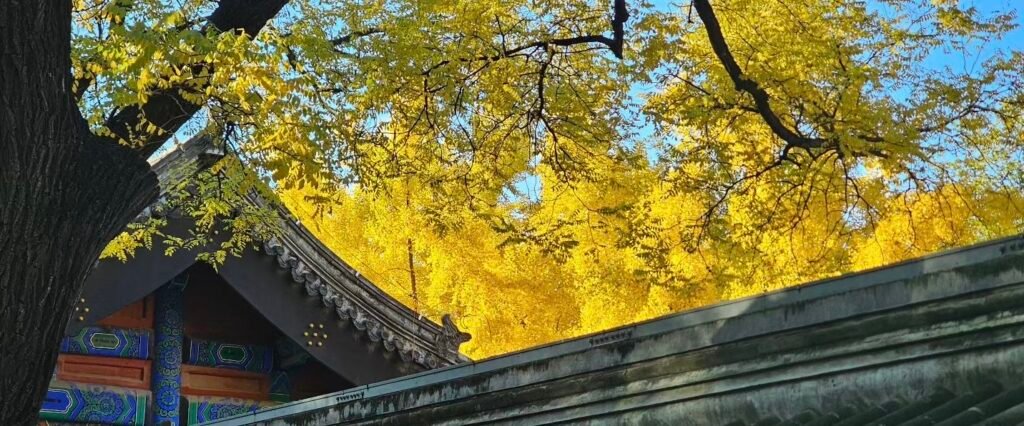
The ginkgo leaf has become an unofficial symbol of Beijing’s autumn. In temple courtyards, university campuses, and hutong alleyways, its fan-shaped leaves create postcard scenes.
Many historic temples in Beijing are famous for their autumn ginkgo displays. Photography enthusiasts gather early in the morning to capture the perfect light filtering through golden branches.
For travelers, this is arguably the best time to visit Beijing. The air is clear. The temperatures are mild. And the city reveals a softer side that contrasts beautifully with its monumental architecture and fast-paced rhythm.
A Personal Reflection
Every year, when the ginkgo trees begin to glow, I feel a quiet gratitude. Golden Autumn in Beijing reminds me that even in a city of more than twenty million people, there are moments of stillness.
Standing beneath a tree in Chaoyang Park, listening to leaves rustle above me, I sense the heartbeat of the city. It is steady, resilient, and endlessly fascinating. Autumn does not shout here. It whispers.
And perhaps that is why it feels so irresistible.