On a sunlit afternoon near the Forbidden City, the tourists pause—not for a celebrity, but for a young woman gliding past in layers of pale blue silk. Her sleeves trail like soft clouds, her hair pinned with a jade clasp. In the middle of Beijing’s modern rush, the past has learned how to stop traffic.
Across the capital, especially in the maze-like hutongs and around historic landmarks, a growing number of young Chinese are stepping out in traditional Chinese clothing. You will see Hanfu inspired by the Han dynasty, the structured elegance of Ming robes, and the bold, cosmopolitan silhouettes of Tang-era gowns.
Hanfu in China is More Than Just a Social Media Trend
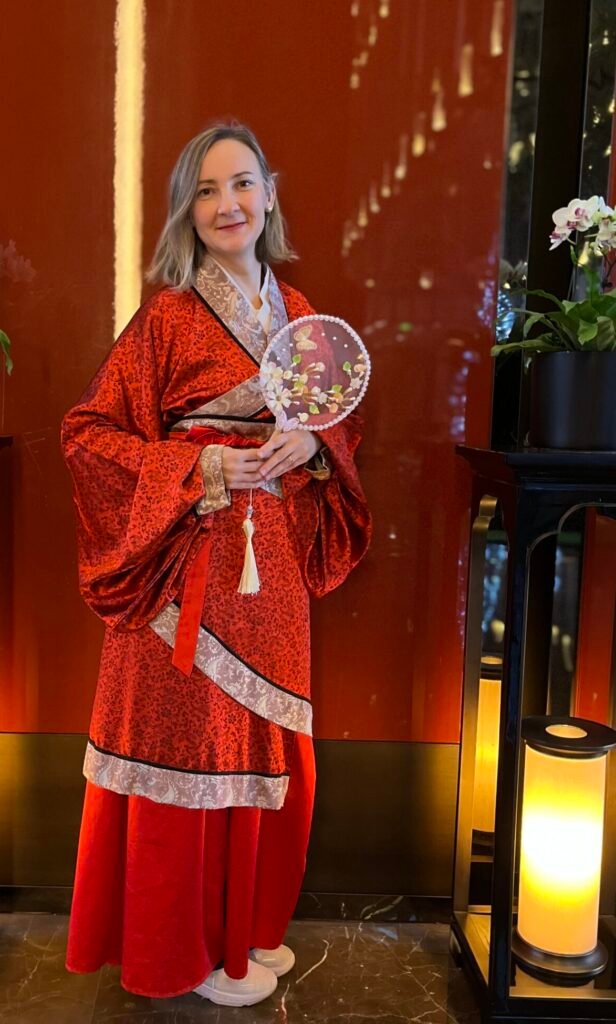
At first glance, the Hanfu trend in Beijing might look like nostalgia dressed up for social media. But the revival of traditional Chinese clothing is more layered than a single trend. For some, Hanfu offers something radically different: garments tied rather than zipped, silhouettes that favor drape over tightness, and colors that echo ink paintings and palace murals instead of seasonal trends. Wearing it is a way of saying, “I don’t want to look like everyone else.”
For others, it’s a bridge to history that textbooks never quite delivered. These clothes are wearable archives. Putting them on becomes a form of embodied learning—history you can walk around in, history that moves and breathes. However, the most obvious quality of the Hanfu revival is simply: joy.
The Joy of Cinematic Everyday Life
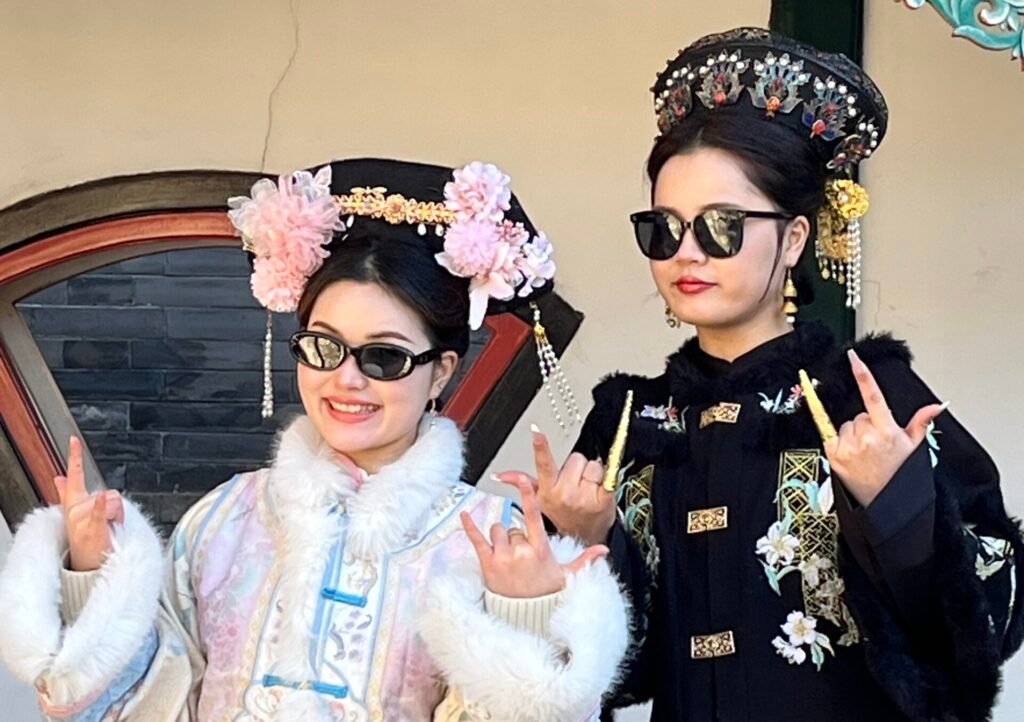
“Because it’s fun” is an answer heard just as often as any grand cultural explanation. Hanfu sways beautifully when you walk. It transforms ordinary streets into cinematic backdrops. It makes a coffee run feel like a scene from a period drama. In an age where life is constantly documented, these clothes are irresistibly photogenic—designed, it seems, for courtyards, red walls, carved gates, and the soft blur of willow trees along a canal.
Social media has amplified this pleasure. Online communities trade styling tips, historical debates, and location recommendations like “best hutong for Ming vibes” or “go at golden hour by the palace moat.” You’re not just wearing clothes; you’re participating in a shared aesthetic moment.
Where Past and Present Coexist
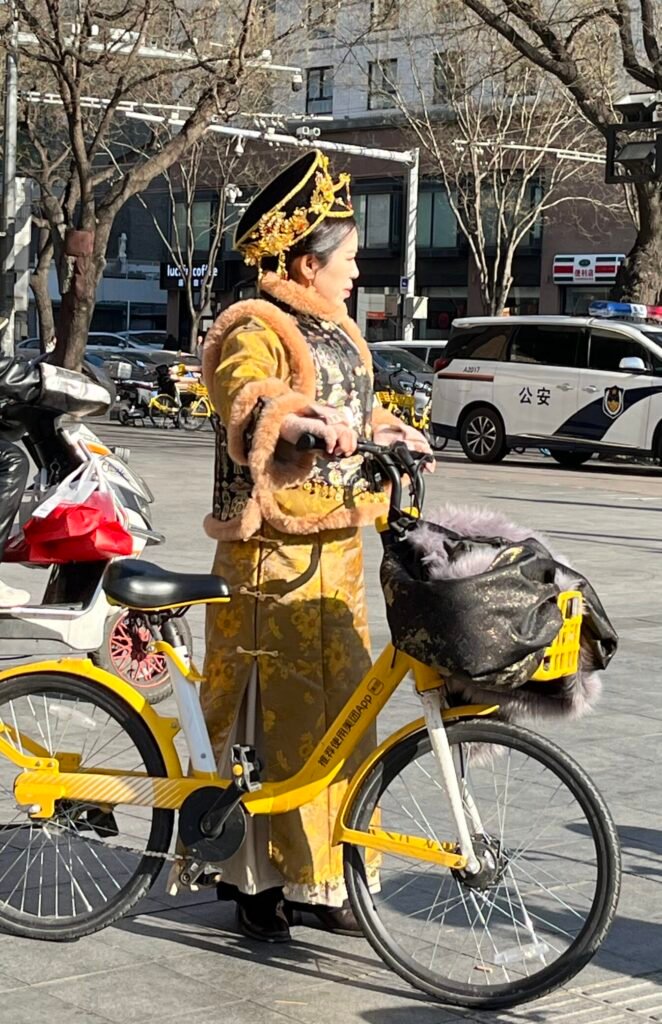
Importantly, this Hanfu revival is not about rejecting modern life. Most wearers slip back into jeans and sneakers on Monday morning. The beauty of the movement lies in its hybridity: ancient silhouettes paired with smartphones, subway cards tucked into embroidered sleeves, and dynastic elegance navigating pedestrian crossings.
In Beijing’s hutongs, where centuries-old bricks coexist with boutique cafés and electric scooters, the sight of Hanfu feels especially right. It mirrors the city itself—layered, contradictory, and alive. Past and present don’t cancel each other out; they pose together for the camera.
So is this a cultural reawakening? A soft protest? A fashion statement? Yes. But above all, it’s a reminder that Chinese traditional dress doesn’t have to sit behind glass. Sometimes, it walks beside you, laughs with friends, and pauses—just for a moment—so someone can take a picture.